The Therapeutic Treasure Box: Insights from Dr. Karen Treisman
A Conversation on Trauma-Informed Care and Resources for Children and Families In this week’s post, we’re delighted to spotlight a thought-provoking conversation between Philippa and Dr Karen Treisman, a renowned clinical psychologist, trainer, and author of the highly acclaimed “The Therapeutic Treasure Box”. Dr Treisman was awarded an MBE in the Queen’s 2020 honours list for her outstanding services to children, making her an inspirational voice in the field of trauma-informed care.
Philippa
1/17/20264 min read
Understanding Trauma: Beyond the Event
The discussion opens with the question, “What is trauma?” Dr Treisman unpacks trauma as a broad, umbrella term, encompassing cultural, intergenerational, school-based, historical, systemic, developmental and relational trauma. Crucially, she emphasises that trauma is not simply the event itself, but the lasting impact it has on an individual’s sense of power, safety and wellbeing. Trauma often leaves people feeling powerless, overwhelmed, and with an activated nervous system. It’s not just about what happened—it’s about how those experiences are processed and stored, sometimes resurfacing as emotional responses long after the event has occurred.
Trauma Stored in the Body
Dr Treisman explained that trauma can be “encoded or imprinted” in the body—manifesting in sensations, smells, sounds and feelings. Unprocessed trauma lacks a timestamp, meaning its effects can emerge unexpectedly, triggered by situations that evoke similar emotions or memories. She likens it to a tuning fork that resonates long after the initial impact and highlights how trauma can influence behaviour and emotional responses in everyday life.
Trauma-Informed vs Trauma-Aware: Making a Real Difference
Increasingly, organisations and schools are striving to be “trauma-informed”, but Dr Treisman warns against diluting the term. There’s a vital distinction between being trauma-aware and truly trauma-informed—between good intentions and effective practice. Trauma-informed care involves embedding core values and principles into every aspect of an organisation, from policies to daily interactions, ensuring that all staff and carers are equipped to respond compassionately and effectively to trauma.
She refers to the “four Rs” of trauma-informed practice: Realise, Recognise, Resist, and Respond. It’s about infusing a trauma lens into every role, whether you’re a teacher, psychologist, or security guard, and ensuring that both children and adults feel safe, supported, and understood.
Rethinking Parenting Approaches
The conversation explores how trauma-informed principles can reshape traditional parenting styles, especially for children in foster care or those who have experienced relational and developmental trauma. Dr Treisman advocates for a balanced approach—one that combines compassion, curiosity, and boundaries. Rather than swinging between punitive measures and permissiveness, trauma-informed parenting is about fostering emotional vocabulary, offering choice and voice, and supporting children to feel seen and valued. It’s also about recognising each child’s unique developmental stage, not just their chronological age, and scaffolding emotional regulation with sensitivity rather than shame or punishment.
The Importance of Structure and Boundaries
Contrary to some misconceptions, trauma-informed approaches don’t mean a lack of structure. In fact, clear boundaries and routines can be deeply reassuring for children, especially those who have experienced trauma. Dr Treisman describes trauma-informed care as a “North Star” that provides guidance, safety and predictability in uncertain times—a principle she found invaluable during events like the COVID pandemic.
Big ‘T’ and Small ‘t’ Traumas: Universal Support
Not all trauma is dramatic or easily visible. Dr Treisman notes that children can be impacted by both ‘Big T’ traumas (like bereavement, abuse, or displacement) and ‘small t’ traumas (such as bullying or the loss of a pet). Trauma-informed care is a universal approach that benefits all children, not just those with the most obvious needs. By embedding supportive practices across the board, schools and communities can be proactive rather than reactive, preventing harm before it occurs and ensuring that no child slips through the cracks.
Resources for Connection: Books, Cards and Creative Activities
A major part of Dr Treisman’s work has been developing resources—activity books, cards and guides—to help children and adults process emotions, build resilience and communicate more effectively. Inspired by years of clinical practice and feedback from families, these tools are designed to be practical, accessible and relational. They’re not just for therapists; parents, carers, teachers and youth workers can all use them to spark meaningful conversations, build emotional dictionaries, and create safe spaces where children feel heard.
Her sentence completion cards, for example, can be used at home or in school to encourage children to express themselves, giving them control over what they share. The resources are springboards for dialogue—not prescriptive tasks—and can be adapted to suit individual interests, whether that’s through art, storytelling, or play. Dr Treisman emphasises that every interaction is an intervention, and small acts of connection can have a profound impact.
Relational Health and Co-Regulation: The Heart of Healing
Central to trauma-informed care is the idea of relational health—helping children move from relational poverty to feeling seen, heard and valued. Relationships can heal the wounds that relationships created, and adults play a critical role in co-regulating emotions and modelling healthy responses. Dr Treisman’s resources are designed to facilitate these connections, making it easier for adults to “sit alongside” children, bear witness to their struggles, and help them navigate both the painful and joyful aspects of life.
Spotlight on New Resources: ‘Taya the Tortoise’
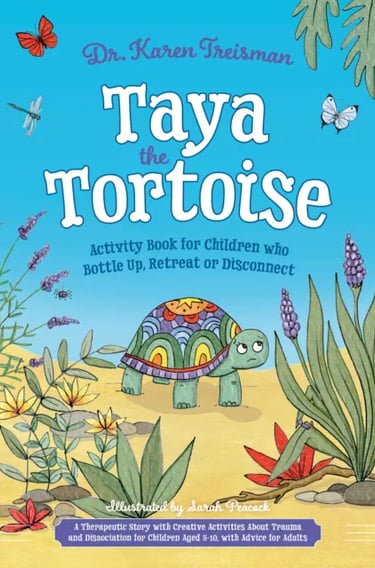
One of Dr Treisman’s latest releases, “Taya the Tortoise”, focuses on children who internalise trauma—those who appear quiet, compliant, or “good as gold” but may be withdrawing, dissociating, or bottling up pain. These children are often overlooked, and the book offers worksheets, tips and strategies to help adults connect with them, honour their coping mechanisms, and gently encourage expression and healing.
Her other resources cover topics such as bereavement (“Ollie the Octopus”), anxiety (“Benny the Baboon”), emotional regulation (“Presley the Pug”), self-esteem (“Gill the Giraffe”), and more, all designed to be used flexibly across ages and settings.
Accessible Support for All
Dr Treisman’s books, cards and online modules are widely accessible—not just for professionals, but for parents, carers, and teachers too. She offers training and webinars to help users make the most of these resources, and her website and social media pages are packed with free articles, guides and updates.
A Final Thought: Every Interaction Matters
Dr Treisman’s message is clear: supporting children and families through trauma is challenging, but every small step counts. Whether you’re a practitioner, parent, foster carer or educator, you can make a difference by approaching each interaction with curiosity, compassion and a willingness to walk alongside young people on their journey towards healing.
For more information and links to Dr Treisman’s resources, visit her website, join her Facebook community “Safe Hands and Thinking Minds”, or subscribe to her quarterly newsletter for practical tips and updates.
Thank you to Dr Karen Treisman and Philippa for this insightful conversation—and to all those working to empower young minds with resilience, hope and connection.